

Private Champagne Tastings in Amsterdam
Updated: Aug 29
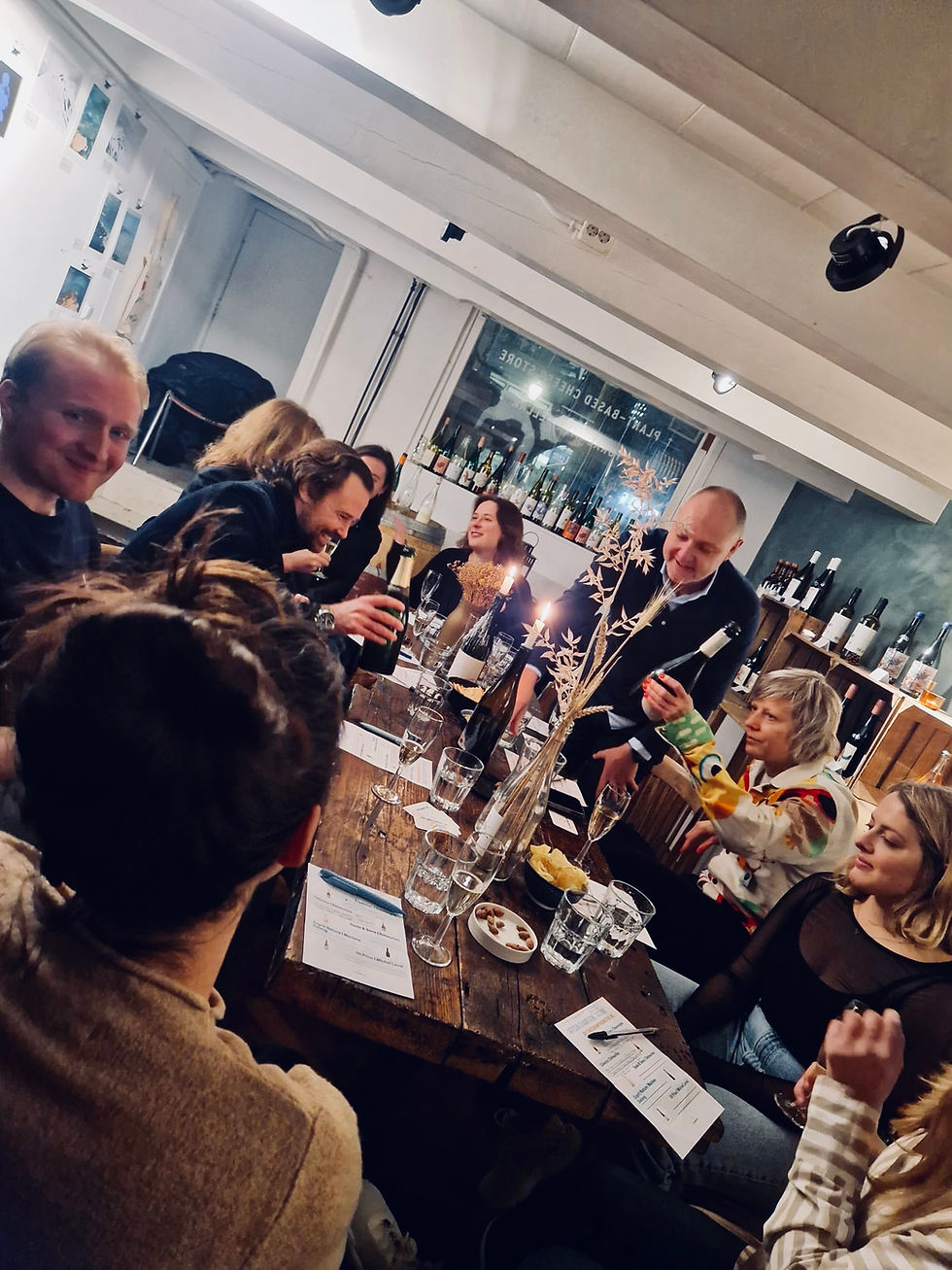
Most people learn about champagne in the worst possible way. A crowded room, a supermarket wine class, a host reading dosage percentages off a card, six glasses lined up with numbers instead of names. You leave knowing that champagne has bubbles and that some bottles cost more than others. Nothing sticks.
We think tastings should work the other way around. A champagneproeverij should feel like a dinner where the wine is finally the guest of honor. Fewer bottles, more story, real people behind every label. That is the kind of private champagne tasting we host in Amsterdam and across the Netherlands, and this page explains what actually happens when you book one.
What a Champagne Fox Tasting Actually Looks Like
A typical session runs four to five bottles over two hours. That range is deliberate. Under four bottles and you never build a comparison. Over five and palates start to blur, especially with sparkling wine and its acidity. We pour smaller measures than a normal tasting so nobody feels rushed or overserved, and we let the last glass breathe long enough for a proper conversation.
We open bottles from growers we know personally. That matters, because a grower champagne is farmed and made by one family on their own plots, not blended anonymously across the region. When we pour a bottle of De Sousa from Grand Cru Avize, we can tell you which slope the Chardonnay comes from, why the chalk under Avize gives it that saline finish, and what Erick de Sousa was thinking when he moved the family estate to biodynamic farming. That is not a rehearsed script. It is what happens when you buy directly from the people who grow the fruit.
Every guest gets the champagne tasting basics in the first ten minutes: how to look at the bead, how to smell without drowning your nose in the glass, how to tell a Chardonnay-driven wine from one with more Pinot Noir in it. After that we stop lecturing. Questions drive the rest of the session, and we would rather answer one real curiosity than deliver a monologue nobody asked for.
Champagne Tastings Formats We Offer
We keep four formats because most requests fall into one of them.
At-home tastings are the most popular. Four to eight people, your living room or kitchen counter, everything provided: glasses, bottles, ice buckets, a printed sheet with each producer, a spit cup for guests who want one. You handle the guest list and maybe some cheese. We handle the rest. This is the version people book for birthdays, anniversaries, or a Saturday evening when they want their dinner party to actually mean something.
Corporate and team tastings are the second format. These run larger, usually ten to twenty-five people, and we adjust the structure: shorter tasting notes, a light interactive element, a takeaway sheet so people remember what they liked. We have hosted these for law firms, agencies, tech teams on an offsite, and one memorable session for a hospital department who wanted a break from procurement conversations. The tone is professional but not stiff. Nobody wants a pop quiz on their day off.
Gift experiences are the third. Someone books a session as a present for a partner, a parent, or a friend leaving Amsterdam. We coordinate with you on the theme, the level, and any allergies or preferences. The recipient gets a scheduled evening they cannot buy off a shelf, and you get to skip the search for another silk scarf.
Thematic sessions are the fourth. These are for guests who have done a general tasting already and want to go deeper on a specific question. More on those below.
If you have never done a formal tasting before, our champagne guide is worth a read before booking. It covers the basic vocabulary, so during the session you can spend attention on the wine rather than translating jargon in your head.
Tssting Themes You Can Choose
Thematic tastings work best when the group already shares a bit of context. We run five main themes and can build custom ones on request.
Blanc de Blancs comparison lines up three or four one-hundred-percent Chardonnay champagnes from different villages: Avize, Cramant, Le Mesnil, sometimes Montgueux for a wild card. The point is to taste chalk. Every one of these wines is made the same way from the same grape, and yet each village tastes different because the soil under the vines is different. It is the fastest way we know to convince a skeptic that terroir, the specific character a place gives a wine, is real.
Grower versus grande marque puts a family-run bottle next to a bottle from one of the big houses everyone recognizes. We do not do this to trash the big brands. Their consistency is remarkable and there is real craft in blending at that scale. We do it to show what changes when a single family owns the whole chain from vine to bottle: more variation year to year, more personality, often less dosage, the small sugar addition at the end of production, and usually a lower price for a wine with more to say.
Terroir walk moves through the four main regions of Champagne in one session. Vallée de la Marne, Côte des Blancs, Côte des Bar, Côteaux du Sézannais. Same méthode traditionnelle, the classical second-fermentation-in-bottle process, different soils, different grape blends, different results. This is the closest thing to a geography class we run, and it is the theme most guests remember months later.
Zero dosage focuses on champagnes bottled without added sugar at the end. It is the most polarizing theme we host. Some guests fall in love, others miss the roundness. Either reaction is fine, and that is the point of putting five of them in a row.
Producer deep-dive picks one grower and pours their range: entry cuvée, vintage, top bottling. If you have a favorite family already, this format is how you understand what they are actually doing.
If none of these fit, we design something. A guest last winter asked for four different styles of champagne served with matching cheeses, and we built it in a week. If you want to meet the growers before booking, our producer page shows every family we work with and the bottles we currently pour from each.
Who Books Us for Champagne Tastings in Amsterdam (and Why)
Most of the people who book us are not champagne experts, and that is the point. They enjoy the wine, they want to understand it better, and they want a session that respects their intelligence.
Some are hosts who are tired of the standard Amsterdam dinner-party formula and want something their guests actually talk about the next morning. Some are couples who bought a good bottle once and want to know how to buy the next one on purpose. Some are teams looking for an evening that is not another escape room. A handful are enthusiasts who have already done the big producer visits in Reims and Épernay and want to compare notes with someone who actually drinks the stuff at home.
Nobody who books a private tasting champagne session in Amsterdam has to prove anything. We do not test guests, we do not run blind quizzes unless the group specifically wants one, and we never grade palates. If you like a wine, we tell you why. If you dislike one, we tell you why that reaction makes sense. The goal is that you leave able to find the grower who fits your palate on your own, without needing us next time.
For guests who want to keep exploring after the session, we can point you toward the best spots to open a bottle around Amsterdam, from wine bars that carry grower bottles to restaurants where a corkage fee gets you our champagnes at your table.
Booking, Group Size, and Timing for your tastings in Amsterdam
Group size runs from four to twenty-five. Under four the pacing suffers and the price per person climbs quickly. Over twenty-five and the format changes: we can still host you, but it becomes closer to a moderated event than a conversation.
Timing is flexible. Weekday evenings are the most common slot for corporate bookings. Weekend evenings fill up first for at-home tastings. Sunday afternoons work well for smaller groups who want to make an event of it. We recommend booking three to four weeks ahead in autumn and December, and two weeks ahead for the rest of the year.
Location is your call. We come to your home, your office, a private room at a restaurant if you have one, or a rented space if you prefer. For corporate sessions in the Netherlands, we travel to Amsterdam, Utrecht, Rotterdam, Den Haag, and most of the Randstad without a surcharge. Anywhere further afield in the Netherlands we quote transport case by case.
Pricing depends on the format, the bottles you want opened, and the group size. Every quote is transparent: the bottle list, the number of glasses per bottle, the fee for our time, and any travel cost. There are no service charges, no minimums for wine markups, no surprise line items on the invoice. If a session includes rarer bottles, we say so before you book.
To book, send us the date, the group size, the format you have in mind, and any theme or dietary constraints. We reply within one working day with a proposed bottle list and a firm quote. If you want us to design the whole thing, tell us that and we will propose a session based on the group.
Champagne is one of the few wines in the world that improves when you slow down and share it.
That is what a good tasting does. It slows the wine down. And once you have tasted four grower bottles side by side in your own living room, you will never look at the supermarket shelf the same way again. That is the outcome we are going for, and it is why we keep hosting these sessions one small group at a time.


