

Blanc de Noirs Champagne: The Bold Guide
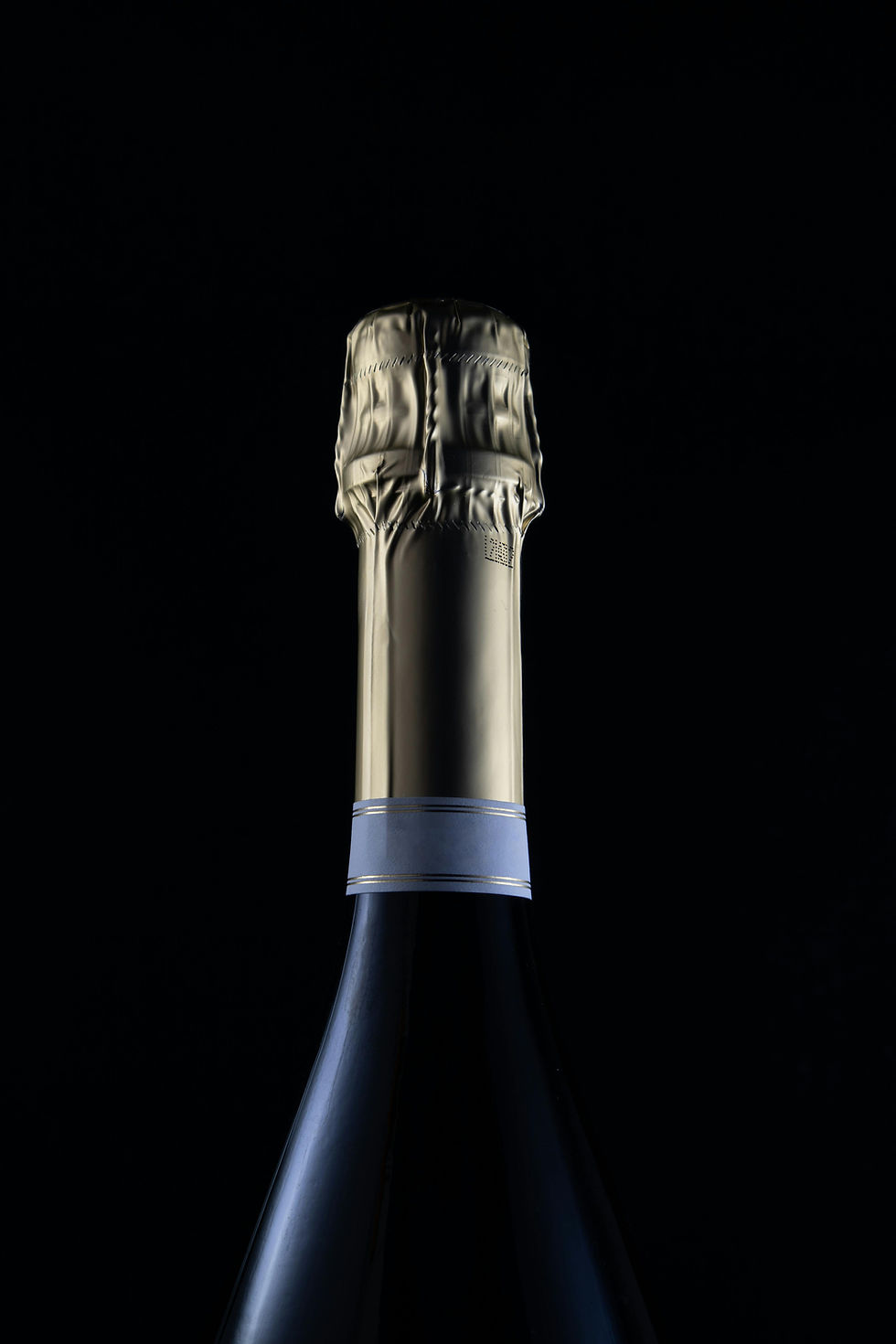
Most people think of champagne as light and delicate. If that is your assumption, you have not yet tasted an excellent Blanc de Noirs. This is champagne with backbone, champagne with presence, champagne that proves bubbles do not have to mean delicate.
Blanc de Noirs is made 100% from dark grape varieties, primarily Pinot Noir with sometimes Pinot Meunier blended in. Because the skins are removed immediately after pressing (before they can colour the juice), the wine stays white. But the character comes straight from the bold, structured nature of Pinot Noir. The result is a champagne that is fuller-bodied, richer, and more food-friendly than its lighter cousins.
If you gravitate toward fuller-bodied wines, if you love champagne that tastes like it has something to say, if you want bubbles that pair beautifully with real food, Blanc de Noirs is your style.
What Blanc de Noirs Actually Is
Let us clear up a confusion that trips up many champagne newcomers. Despite the name "Blanc" (white), Blanc de Noirs is not white in the same sense as Blanc de Blancs. Both are white in colour, meaning clear and pale. But Blanc de Noirs gets its character from dark grapes.
The name literally means "white from blacks," referring to the fact that white juice comes from black grapes. This happens because during pressing, the juice is separated from the skins before fermentation. The skins carry the colour. No skin contact, no colour, and you end up with white wine made from dark grapes.
This single detail, the absence of extended skin contact, is what distinguishes Blanc de Noirs from red wine. Everything else about the production is identical to other champagne: the méthode traditionnelle, the second fermentation in bottle, the aging on the lees. The result is champagne that tastes fuller and richer than lighter styles, but still retains the elegance and delicacy that the traditional production method provides.
The Flavour Profile
Open a bottle of quality Blanc de Noirs and what hits you first is the aroma. This is where the difference from Blanc de Blancs becomes immediately obvious. Where Blanc de Blancs offers citrus and mineral, Blanc de Noirs offers red fruit: strawberry, cherry, sometimes a hint of raspberry. Beneath that sits a deeper, richer character than you would find in champagne made from Chardonnay.
In the mouth, Blanc de Noirs is noticeably fuller-bodied. The acidity is still there, the characteristic champagne freshness is still there, but it feels integrated into a richer, more complex whole. The bubbles feel substantial rather than ethereal. The finish carries red fruit character alongside mineral notes, and there is a lingering quality that suggests substance and depth.
Different producers create different expressions. Some lean into the fruit character, creating Blanc de Noirs that feel almost juicy. Others emphasize the mineral and floral notes, creating wines that feel more restrained and sophisticated. Some incorporate oak for additional richness and complexity. The diversity within the style is remarkable.
The best way to understand these differences is to taste several bottles side by side. Try a Blanc de Noirs from a producer focused on elegance, then one from a producer who emphasizes richness. Suddenly the subtleties become obvious, and you begin to understand what different winemakers are trying to accomplish.
Blanc de Noirs vs. Blanc de Blancs: The Essential Comparison
If you want to educate your palate about champagne, the single best thing you can do is taste a Blanc de Blancs and a Blanc de Noirs side by side. The contrast teaches you volumes.
Blanc de Blancs is crisp, mineral, delicate. It feels like liquid conversation, refined and intellectual. Blanc de Noirs is fuller, fruitier, richer. It feels like it has something more substantial to say. Neither is better, they are simply different, and both are valuable in different moments and with different foods.
If you prefer lighter, fresher wines and love mineral expression, Blanc de Blancs is likely your go-to. If you tend toward fuller-bodied wines and appreciate richness and structure, Blanc de Noirs probably speaks to you more strongly. Or you might love both and reach for them based on your mood, the occasion, and what you are eating.
The comparison is so instructive that we recommend this experiment: pick two Blanc de Noirs and two Blanc de Blancs from different producers. Taste all four over the course of an evening, and take notes on what you smell, what you taste, and how you feel about each one. Your palate will become notably more educated just from that single tasting.
Montagne de Reims: The Heart of Blanc de Noirs
While Blanc de Blancs comes from the Côte des Blancs, Blanc de Noirs is rooted in the Montagne de Reims, a forested mountain south of the city of Reims that is home to some of Champagne's most serious Pinot Noir.
The Montagne de Reims sits at a slightly higher elevation than the Côte des Blancs, with clay and limestone soils that are richer and more mineral-laden. The cool climate means Pinot Noir struggles to fully ripen, which keeps the acidity high and prevents the wines from becoming overripe or jammy. The result is Pinot Noir with balance, structure, and real elegance.
Several villages on the Montagne de Reims hold Grand Cru status. Ambonnay, Bouzy, and Verzenay are especially renowned for Pinot Noir. When you see one of these names on a Blanc de Noirs label, you know you are drinking from the heartland of the style.
The connection between terroir and taste is direct here: the clay and limestone of the mountain creates the richness and structure that defines Blanc de Noirs. Walk through these vineyards and you feel the personality in the soil.
Food Pairing: Where Blanc de Noirs Excels
This is where Blanc de Noirs champagne truly shines. The fuller body, the red fruit character, the underlying structure, all of it makes this a champagne that pairs beautifully with actual food in ways that lighter styles sometimes struggle with.
Grilled fish and poultry are natural pairings. The richness of salmon or trout, the subtle flavour of duck or chicken, both benefit from the depth of Blanc de Noirs. The acidity cuts through the richness of the preparation. The red fruit adds complexity without competing with the food. It is a pairing that feels elegant rather than heavy.
Lighter meat dishes work beautifully. A grilled pork chop, a lamb shank in a simple preparation, a light roast chicken. The structure of Blanc de Noirs stands up to these preparations in ways that Blanc de Blancs sometimes cannot. The champagne becomes a partner to the food rather than a supporting character.
Even richer preparations can work. A piece of seared duck breast, a grilled steak, these benefit from the substance and weight of Blanc de Noirs. Most champagne is too light for beef or rich preparations, but Blanc de Noirs has enough presence to hold its own.
Blanc de Noirs even works with some cheeses. Aged, harder cheeses especially. The structure of the champagne echoes the structure of the cheese. The acidity cuts through the richness. The red fruit adds another dimension.
The versatility is one of the great strengths of this style. Blanc de Noirs is not just an aperitif champagne. It is a champagne for the table, for moments when you want bubbles to be part of the meal.
Selecting Your Blanc de Noirs
If you are new to this style, start with something from a grower producer you can trust. Look for the RM (Récoltant Manipulant) designation on the label. Look at the village name if you want to explore specific terroir, particularly Montagne de Reims names like Ambonnay or Bouzy.
Do not get too caught up in prestige. Some of the most delicious Blanc de Noirs champagne comes from lesser-known producers who are making genuinely excellent wine without the marketing spend of the big names. The best approach is to ask the person selling you the bottle what they love about it, and then drink it with attention and genuine curiosity.
Taste Blanc de Noirs not just on its own, but with food. That is where this style truly comes alive. The difference between tasting it as an aperitif and tasting it with a proper meal is night and day. You will immediately understand why Blanc de Noirs exists as its own category, why it has devoted followers, why serious champagne drinkers seek it out.
Frequently Asked Questions
What does Blanc de Noirs mean?
Blanc de Noirs means "white from blacks," indicating that the champagne is made 100% from dark grape varieties (primarily Pinot Noir, sometimes with Pinot Meunier). The juice stays white because the dark skins are removed immediately after pressing, before fermentation.
How is Blanc de Noirs different from Blanc de Blancs?
Blanc de Blancs is 100% Chardonnay and is crisp, mineral, and delicate. Blanc de Noirs is 100% dark grapes and is fuller-bodied, fruitier, and more structured. Both are white in colour, but they taste quite different.
Where does the best Blanc de Noirs come from?
The Montagne de Reims region south of the city of Reims is the heartland for Blanc de Noirs, particularly Grand Cru villages like Ambonnay, Bouzy, and Verzenay. The clay and limestone soils here produce Pinot Noir with excellent balance and structure.
Is Blanc de Noirs more expensive than other champagne?
Blanc de Noirs can range from very affordable to very expensive depending on the producer. Prestige cuvées will command higher prices, but you can find excellent everyday Blanc de Noirs at moderate cost.
What food pairs well with Blanc de Noirs?
Blanc de Noirs pairs beautifully with grilled fish and poultry, lighter meat dishes, aged cheeses, and even richer preparations. It is one of the most food-friendly champagne styles due to its fuller body and structure.
Should I age Blanc de Noirs?
Non-vintage Blanc de Noirs is ready to drink immediately. Vintage Blanc de Noirs ages beautifully for 5-15 years, developing more complex, toasty character. Store all champagne on its side in a cool, dark place at 10-13°C.


